 Football Cards
 Baseball Cards
 Basketball Cards
 Hockey Cards
 WWE Cards
Web Designer
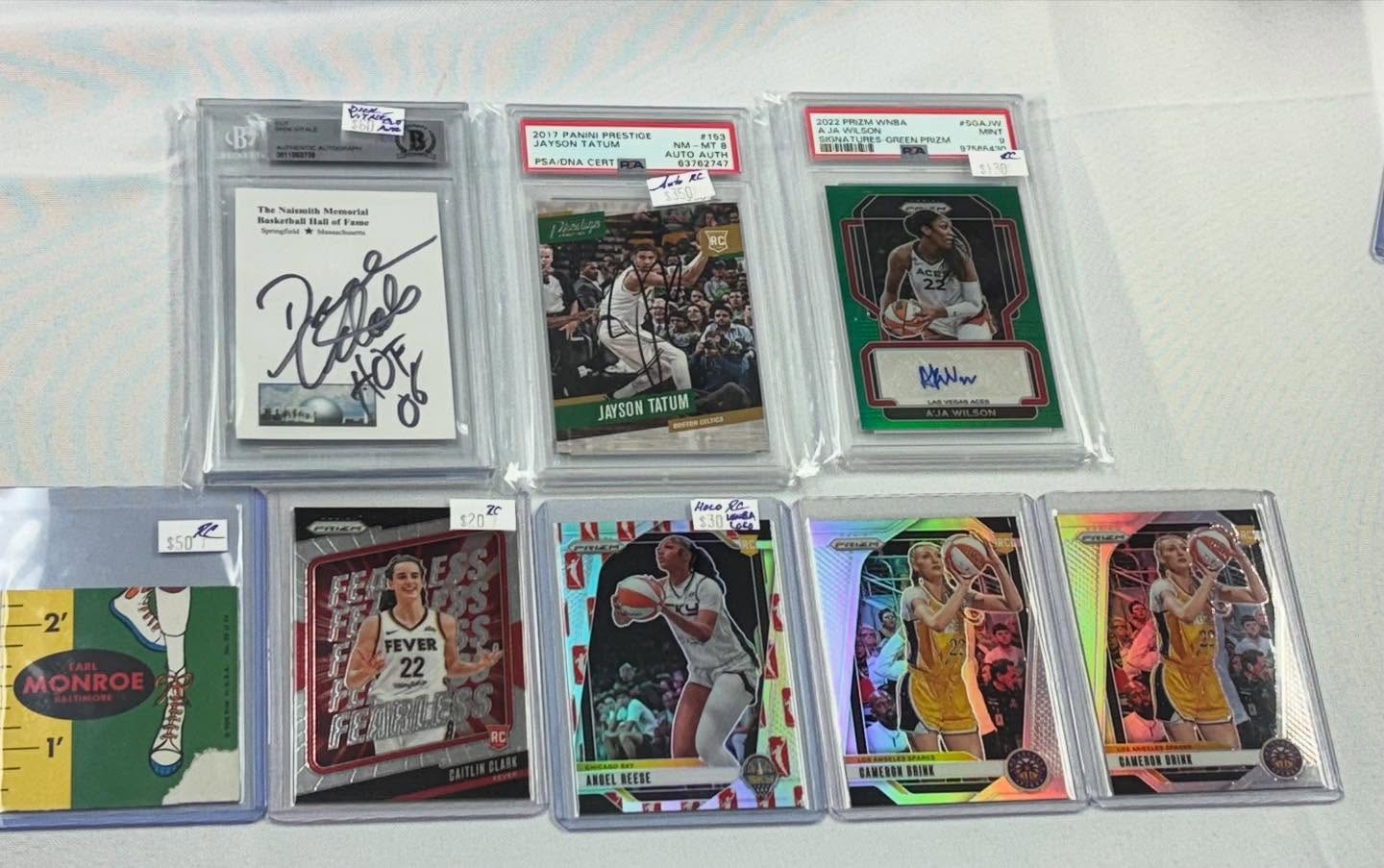
If you've spent any time around the hobby, you've probably heard collectors talk about a card being "raw" or "slabbed." The terms sound simple but the difference between the two actually changes how a card is bought, sold, stored, and valued. Here's a plain breakdown of what each one means and what the numbers say about whether grading is worth it.
What "Raw" Means
A raw card is just a card in its original, ungraded state. It might be fresh out of a pack, tucked in a binder, or sitting in a penny sleeve and top loader. Nobody outside has verified its condition or checked it for authenticity. That doesn't mean the card is bad or fake, it just means no third party has put an official grade on it.
What "Graded" Means
A graded card has been sent to a third-party company that inspects it, checks it for alterations or counterfeiting, and assigns it a numerical grade, usually on a 1 to 10 scale. The card then gets sealed in a hard plastic case (often called a "slab") with the grade printed on the label.
The two biggest names in the space are PSA and Beckett Grading Services (BGS). It's worth hearing what each one says about their own process rather than taking a hobby blog's word for it:
- PSA describes itself as the largest and most trusted card grading service, and notes that submitted cards are encapsulated in a sealed, tamper-evident case with the grade and certification number printed on the label. (PSA, official grading service page)
- PSA also points out that while a good chunk of grading is objective, things like measuring centering or spotting print defects, part of the process still comes down to subjective judgment calls around eye appeal. (PSA, grading standards page)
- Beckett makes a similar case for BGS, pointing to preservation, authentication, and tamper-proof cases as the core benefits, plus a subgrade system that scores centering, corners, edges, and surface separately. (Beckett, official grading page)
Basically, grading exists to answer two questions for a buyer: is this card real, and how good of shape is it in. A raw card leaves both of those questions up to the buyer's own judgment.
Does Grading Actually Change the Price?
Yes, often by a lot, but it depends heavily on the card. Financial and alternative-asset research groups have been tracking this more closely as sports cards get treated less like a hobby and more like a legitimate asset class.
Sports Illustrated's Collectibles desk pulled data from Card Ladder's CL50 Index, which tracks 50 significant sports cards as a proxy for the broader market, and found some graded vintage cards posting returns that outpaced gold, silver, and even the S&P 500 over a 12 month stretch. A PSA 5 copy of the 1952 Topps Mickey Mantle, for example, went from roughly $15,000 to $20,000 in the mid 2000s to regularly selling for over $200,000 today, and PSA 10 copies (only three are known to exist) have been speculated to be worth more than $35 million if one ever hit the open market. “Only three PSA 10 copies of the 1952 Topps Mickey Mantle are known to exist, and while PSA 5 examples are often used as a pricing benchmark, a PSA 10 Mantle would become the most expensive trading card ever sold if it reached the open market, with some speculating it could sell for more than $35 million.” (Sports Illustrated Collectibles)
But that same article makes a point worth repeating here, that “sports cards should not be viewed as a guaranteed or low-risk investment, since unlike stocks or commodities they can be difficult to sell quickly and their prices are heavily influenced by player performance, collector sentiment, and auction timing.”
Other alternative asset researchers back this up with a more cautious tone. A wealth management industry writer covering the space said flat out that “he's skeptical of the investment viability of sports cards overall, and while some cards could be a prudent part of an alternative asset portfolio, the number of cards that actually qualify is limited.” (WealthManagement.com) That's a pretty different take than what you'll read on most hobby sites, and it's worth keeping in mind before treating any card as a sure thing.
An investing research piece from Masterworks noted that during the 2022 market downturn, “trading cards returned about 4.27%, a moderate figure compared to real estate, wine, and whiskey, but still positive during a period of broader stock market volatility.” (Masterworks Insights) That's a helpful reminder that grading premiums move with the market too, they're not fixed.
Why Someone Would Choose to Grade a Card
Setting the investment angle aside for a second, there are some pretty practical reasons a collector might grade a card:
- Authenticity. Both PSA and Beckett build fraud and alteration checks into their process, which matters a lot given how many reprints and altered cards circulate in the hobby.
- Resale confidence. A graded card removes a lot of the guesswork for a buyer who can't inspect the card in person, which matters more and more as card sales move online.
- Long-term protection. The hard case protects the card from handling damage, which raw cards in soft sleeves don't get.
- Set building. Some collectors just like completing graded sets for their own enjoyment, separate from any resale value.
Why Someone Might Choose to Stay Raw
Grading isn't automatically the right move for every card, and it's worth being upfront about the downsides:
- Cost. Grading fees range widely depending on the company, service tier, and declared value. On lower value cards, the fee can eat up more than the card is worth.
- Time. Turnaround times fluctuate and can stretch to months depending on submission volume, so your card is tied up and not liquid while it's out for grading.
- No guaranteed outcome. You're paying to submit a card, not paying for a specific grade. A card you expect to grade a 9 could come back lower, which can actually hurt its resale value compared to just selling it raw.
- Not every card benefits. Common modern base cards printed in huge quantities often don't see a meaningful price jump from grading, since supply is high regardless of condition.
The Bottom Line
Raw and graded aren't really "better" or "worse," they just serve different purposes. Raw cards are cheaper to buy, faster to sell, and fine for collectors who care more about owning a specific player or set than about resale value. Graded cards cost more upfront but come with a level of trust and protection the market is clearly willing to pay for, at least for the right cards.
If you're trying to figure out whether a specific card in your collection is worth grading, or want to see graded inventory in person, stop by Franklin Sports Cards at 15 Main St. in Franklin, MA. We're happy to talk through it.